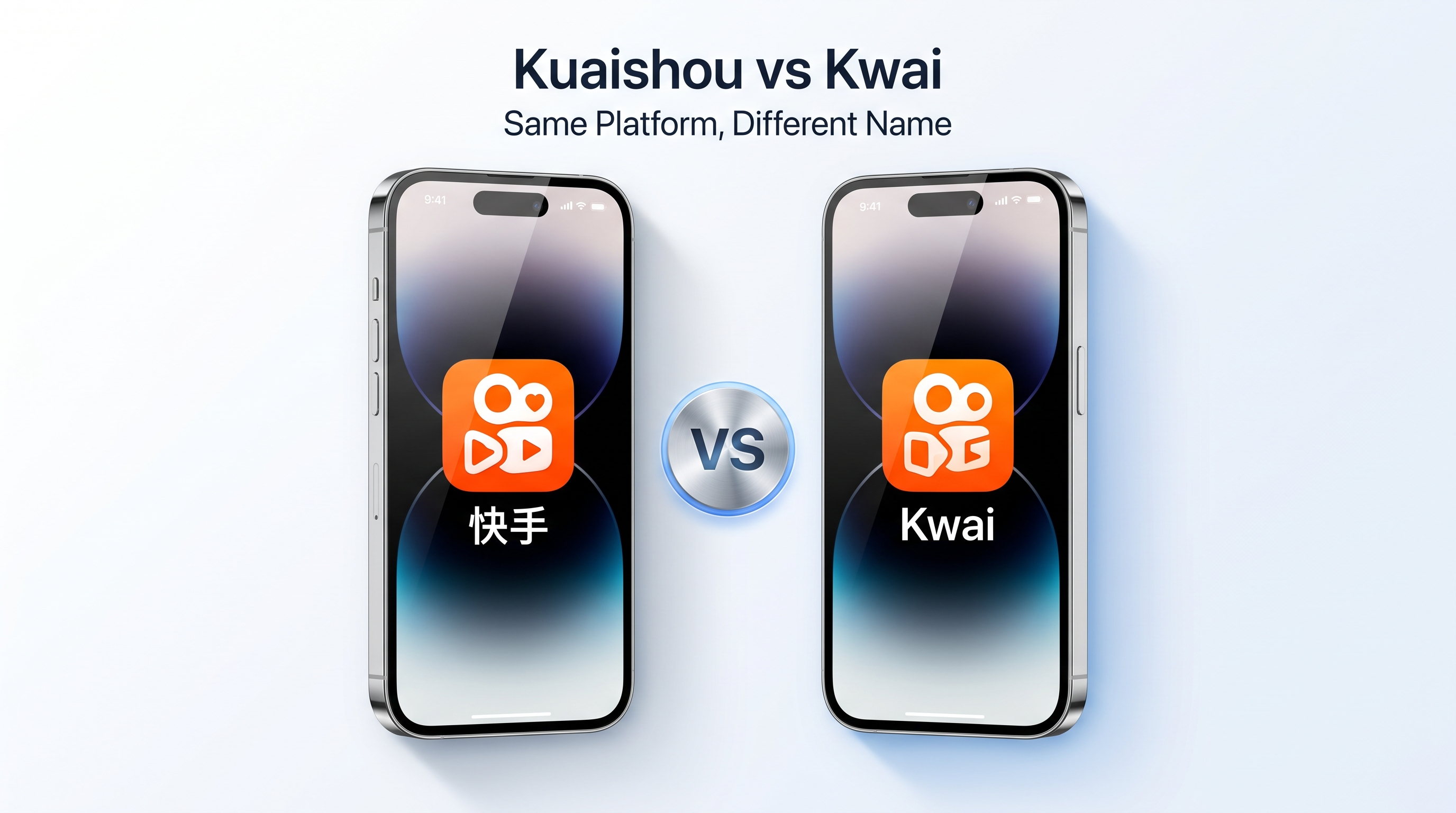
You downloaded a video from Kwai. Your friend calls it Kuaishou. Someone in a YouTube comment says they are totally different apps. Another person says they are exactly the same. A blog post you found just made it more confusing.
Who is right?
All of them — kind of. And none of them fully.
If you have ever scratched your head trying to figure out if you need a Kwai video downloader or a Kuaishou video downloader, this article is for you. We will explain the relationship between these two video platforms, how they evolved, and the real differences you need to know.
Table of Contents
- 1. The One-Line Answer
- 2. But Wait — Why Do Two Names Even Exist?
- 3. The Actual Story of How This App Was Born
- 4. How Big Is This Thing Really?
- 5. So What IS Actually Different Between Them?
- 6. The Name Confusion That's Driving Everyone Crazy
- 7. What Kind of Videos Will You Actually Find on These Apps?
- 8. Can You Download Kwai or Kuaishou Videos?
- 9. Is Downloading These Videos Legal?
- 10. Quick Side-by-Side Comparison
- 11. FAQs
The One-Line Answer
Here is the simple version: Kwai and Kuaishou are the same platform, but they are built for two different app stores and different target regions.
Kuaishou (快手) is the original Chinese version of the app. It is only available inside China.
Kwai is the international version of the same app. It is designed for users outside of China.
They are owned by the exact same parent company: Kuaishou Technology.
Think of it like Douyin and TikTok. Douyin is for China; TikTok is for the rest of the world. Kuaishou and Kwai share the exact same relationship.
But Wait — Why Do Two Names Even Exist?
Why didn't the company just call it Kuaishou everywhere?
In Mandarin Chinese, "Kuaishou" (快手) translates literally to "quick hand" or "fast hand," referring to how quickly users can share and view short clips.
But for a global audience, "Kuaishou" is difficult to pronounce, spell, and remember. To make the app more appealing in international markets, the company shortened the name to "Kwai" (which sounds similar to the first syllable of Kuaishou).
This simple name change has caused massive confusion online. People often talk about "Kuaishou vs Kwai" as if they are rival platforms competing for users. In reality, they are two arms of the same business.
The Actual Story of How This App Was Born
To fully understand how we got here, we have to look back at the history of Kuaishou Technology.
It Started as a GIF App. Yes, Really.
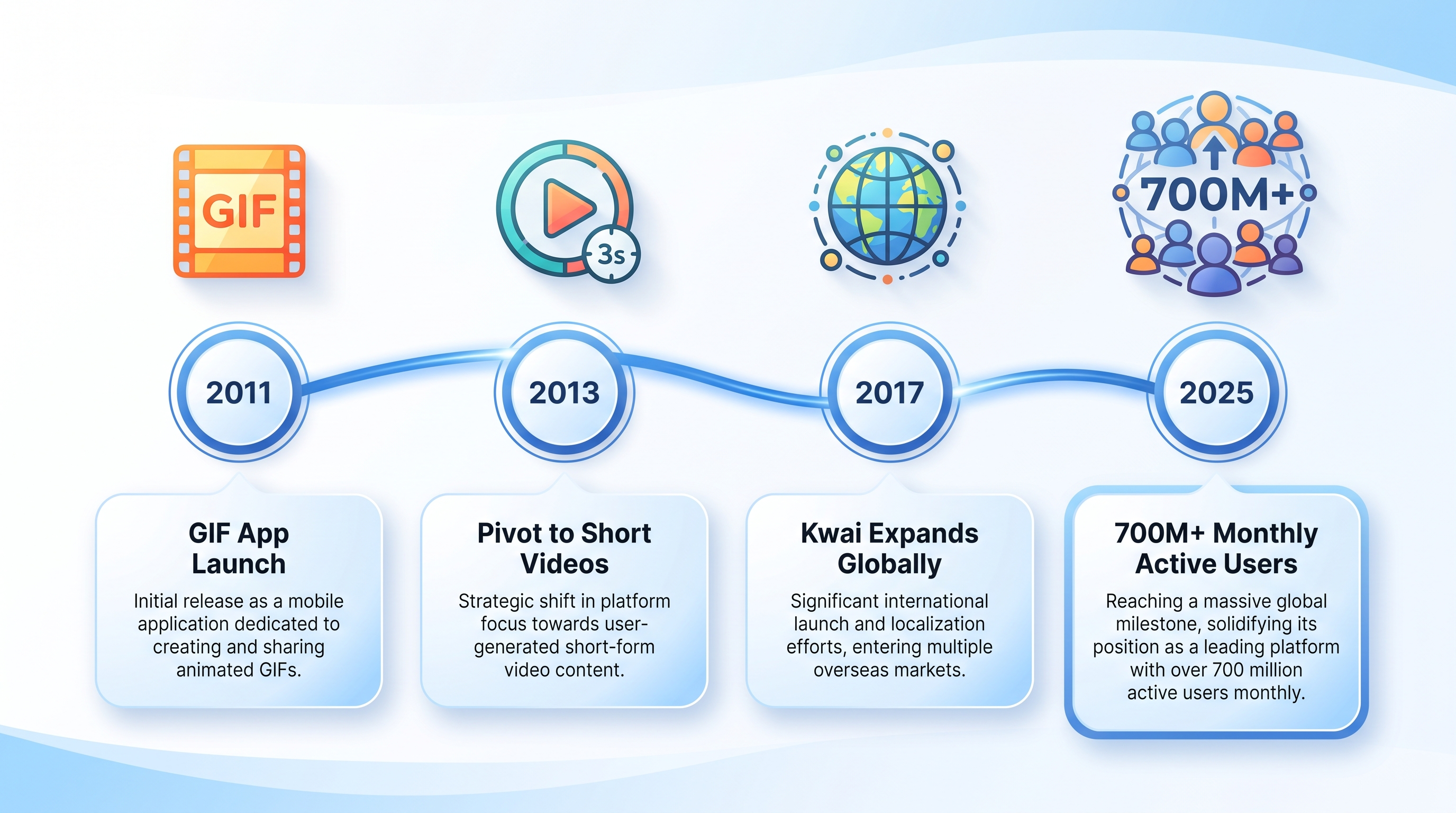
Back in March 2011, a developer named Hua Su launched a simple mobile utility app called "GIF Kuaishou."
The app was not a social network. It was just a tool to help users create animated GIF images that they could share on other platforms like Sina Weibo. It was simple, but it was a huge hit.
Then Everything Changed
In 2013, the app pivoted. Instead of just creating GIFs, Kuaishou allowed users to upload and share short video clips directly on the platform.
By 2014, it had officially dropped "GIF" from its name, becoming just "Kuaishou." The platform grew at an astronomical rate, especially in China's rural provinces and smaller cities, where users loved its raw, down-to-earth feel.
Going Global in 2017
Seeing the massive global success of ByteDance's Musical.ly (which later merged with TikTok), Kuaishou Technology decided to take its platform global.
In 2017, they officially launched Kwai in international markets. It quickly gained massive traction in Latin America (especially Brazil), South Asia, and the Middle East.
How Big Is This Thing Really?
If you live in the US or Europe, you might not hear about Kwai very often. But globally, Kuaishou Technology is a massive giant.
Combined, Kuaishou and Kwai have over 715 million monthly active users (MAUs).
To put that in perspective, that is more than Telegram, Pinterest, or X (formerly Twitter).
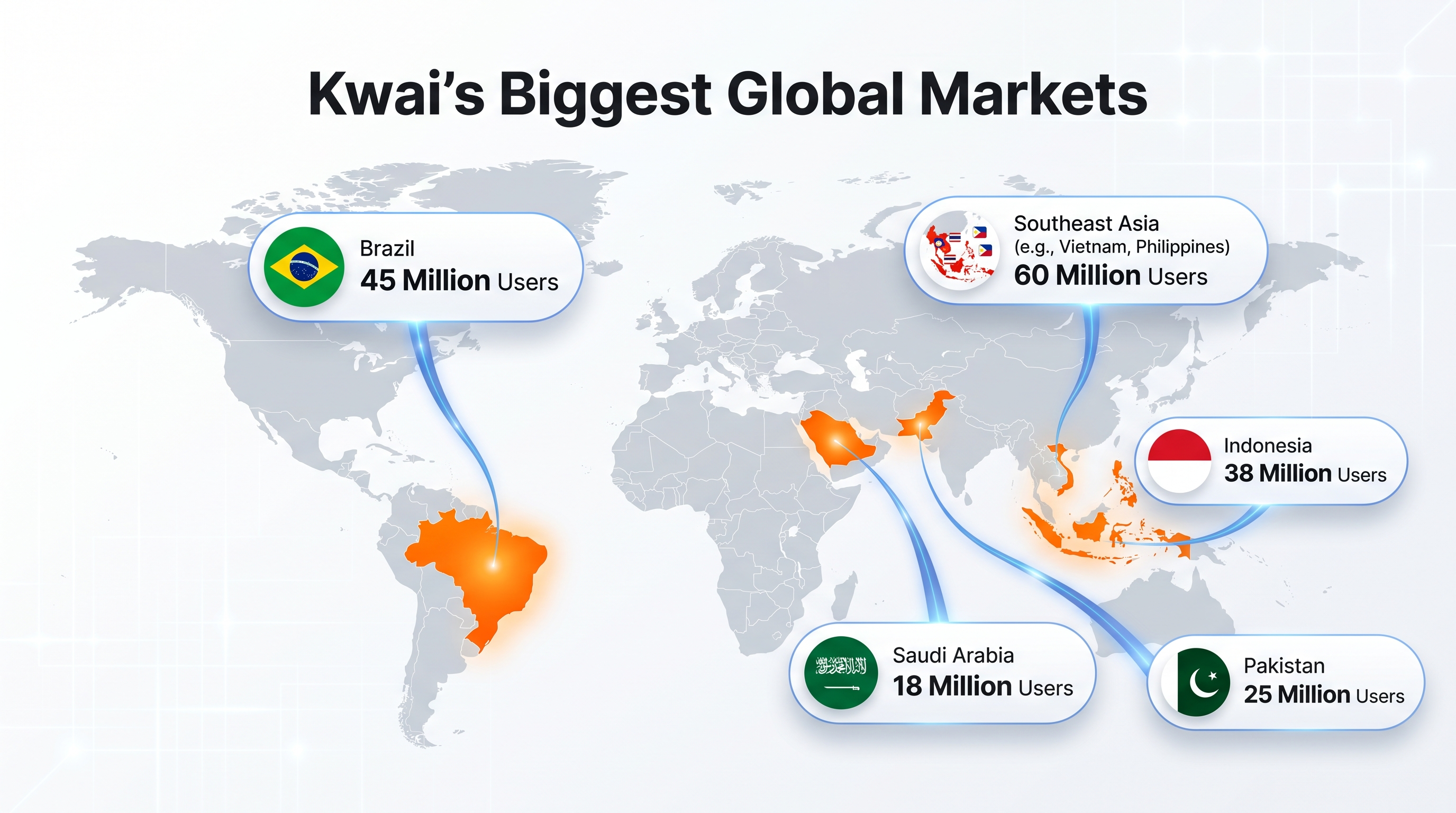
Kwai is particularly dominant in Brazil, where it has over 45 million active users and is a major sponsor of the national football team. It is also extremely popular in Indonesia and Pakistan.
So What IS Actually Different Between Them?
While they share the same DNA, you cannot use them interchangeably. Here are the core differences:
Different Region, Different App Store
If you search "Kuaishou" in a Western App Store (like Google Play or Apple App Store), you probably won't find it. You will see Kwai instead. Kuaishou is only listed on Chinese app stores.
The Content Does NOT Cross Over
The content database is completely separate. A video uploaded to Kuaishou in Beijing will not show up on the Kwai feed in São Paulo. The two user bases do not interact.
Your Account Doesn't Work on Both
If you have a Kwai account, you cannot use those credentials to log into Kuaishou. You would need a separate Chinese phone number to register for Kuaishou.
The Shopping Features Are Very Different
Kuaishou in China is a massive e-commerce powerhouse. Users can buy clothes, food, and electronics directly inside the app during live streams. Kwai has started rolling out e-commerce features in Brazil, but it is still far behind the highly advanced Chinese version.
The Language
Kuaishou is entirely in Chinese. Kwai is localized into over 30 languages, including Portuguese, Spanish, English, and Urdu.
The Name Confusion That's Driving Everyone Crazy
Here is why this particular confusion keeps happening — and why it shows up in so many searches.
When people look for a kwai video downloader, a kuaishou video downloader, or try tools like kwaisave, or kwai — they are all hunting for the same thing. They just use whatever name they saw first.
For example, if you copy a video link from the Kwai app, the URL might look like:
v.kuaishou.com
Or:
kw.ai
Or even:
kuaishou.com/short-video
This means even if you are using the app called "Kwai" on your phone, the links you copy are actually redirecting to "Kuaishou" servers.
This is why our tool is designed to parse both. Whether your link says Kwai or Kuaishou, KwaiSave can extract it.
What Kind of Videos Will You Actually Find on These Apps?
Because the user bases are completely separate, the culture on each app is very different.
On Kuaishou (China)
Kuaishou is famous for its rural content creators. You will find farmers showing off their harvest, village chefs cooking massive meals outdoors, and traditional craftspeople carving wood or making pottery. It has a very warm, authentic, "real life" vibe.
On Kwai (International)
In Brazil and Latin America, Kwai is heavily focused on comedy skits, telenovela style micro-dramas (called TeleKwai), football highlights, and trending dance challenges. It is fast-paced, high energy, and deeply integrated with local pop culture.
Can You Download Kwai or Kuaishou Videos?
Yes. Both apps allow you to download videos directly from their share menus, but there is a catch: the downloaded video will have a floating watermark with the creator's ID.
If you want to save a clean version of a video to share with friends or watch offline without the logo blocking the screen, you can use our free online tool: KwaiSave.
It works in three simple steps:
- Open the Kwai or Kuaishou app and tap the Share button.
- Tap "Copy Link" to copy the video's URL.
- Paste the link into the box at the top of KwaiSave.com and click Download.
Our servers will extract the clean, original video file without any compression.

Is Downloading These Videos Legal?
Downloading videos for your own personal offline viewing is generally safe and fine.
However, you should never re-upload downloaded videos to other platforms (like TikTok or YouTube) and claim them as your own. That violates copyright laws.
If you plan to use a clip in a video project or share it publicly, always get permission from the original creator first and give clear credit.
Quick Side-by-Side Comparison
| Feature | Kuaishou 快手 | Kwai |
|---|---|---|
| Who is it for? | China users | International users |
| Parent company | Kuaishou Technology | Kuaishou Technology |
| Language | Primarily Chinese | 30+ languages |
| Monthly users | 715M+ globally | 45M+ in Brazil alone |
| Content shared? | ❌ Separate | ❌ Separate |
| Login works cross-app? | ❌ No | ❌ No |
| Download tool works? | ✅ Yes | ✅ Yes |
| No watermark download? | ✅ Our tool | ✅ Our tool |
FAQs
Related reading: How to Get Watermark-Free Kwai Downloads, Kuaishou vs TikTok: Which Platform Is Right for You?, and why Kuaishou links fail to download — region differences explain a lot of the naming confusion too.
About the Author: Mehtab Ahmed
Mehtab Ahmed is the founder of KwaiSave and a web developer with 6+ years of experience building browser-based media tools. Based in Lahore, Pakistan, he writes about social media platforms, content creation, and digital tools.